Carrier SLAs monitoring
When mobile connectivity is essential to daily operations, ensuring that mobile network operators deliver the level of service they’ve promised becomes increasingly important. From airports and hospitals to stadiums, shopping centres and enterprise campuses, organisations invest heavily in Distributed Antenna Systems (DAS) and wireless infrastructure to provide reliable indoor coverage.
But when users begin reporting dropped calls, slow data speeds or inconsistent connectivity, a common question arises:
Is the carrier meeting its Service Level Agreement (SLA)?
Surprisingly, this isn’t always easy to answer.
Without independent RF monitoring, proving whether a carrier is delivering the agreed level of service can become a lengthy process filled with assumptions, conflicting data and finger-pointing between multiple parties.
The Problem with Traditional SLA Monitoring
Most mobile carriers monitor the performance of their own networks. DAS vendors monitor the health of their equipment. Building owners often monitor their network infrastructure.
On paper, everything may appear to be working perfectly.
Yet users inside the building could be experiencing:
- Dropped calls
- Slow upload and download speeds
- Delayed application performance
- Poor voice quality
- Failed data sessions
- Intermittent coverage
The problem is that traditional monitoring focuses on network components—not the experience of the people actually using the network.
A healthy base station doesn’t necessarily mean users are enjoying reliable connectivity.
Different Stakeholders, Different Perspectives
Indoor mobile environments involve several different organisations working together.
The mobile carrier is responsible for its network.
The DAS provider ensures the distributed antenna system is functioning correctly.
The venue or building owner is focused on delivering an excellent experience for tenants, visitors or customers.
Each party has access to different information, and each measures success differently.
When connectivity issues arise, everyone looks at their own dashboards, yet no one may have a complete picture of what’s happening from the user’s perspective.
This often results in lengthy investigations where responsibility is difficult to establish.
Why User Complaints Shouldn’t Be Your First Indicator
For many organisations, the first sign of a problem comes from frustrated users.
Staff begin logging IT tickets.
Visitors complain about poor mobile coverage.
Event attendees struggle to upload photos or access mobile applications.
Unfortunately, by the time complaints start arriving, the issue has already impacted the user experience.
Relying on customer feedback as your primary monitoring tool is reactive, inefficient and difficult to scale across large facilities.
Independent RF Monitoring Provides Objective Evidence
Rather than relying on infrastructure alarms alone, independent RF monitoring continuously measures the actual mobile experience inside the building.
By performing scheduled tests using real mobile devices across multiple carriers, organisations gain objective insight into how each network is performing under normal operating conditions.
This allows operations teams to monitor key performance indicators including:
- Signal strength and signal quality
- Data throughput
- Network latency
- Connection success rates
- Carrier availability
- Cell transitions
- Performance trends over time
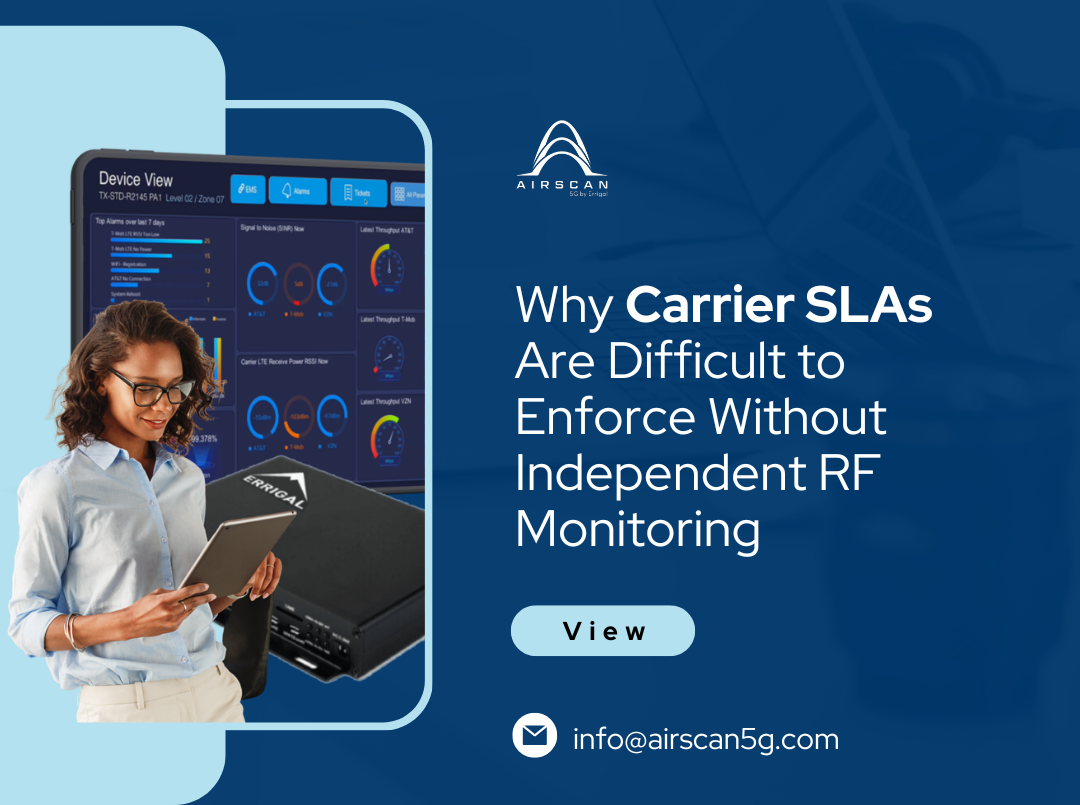
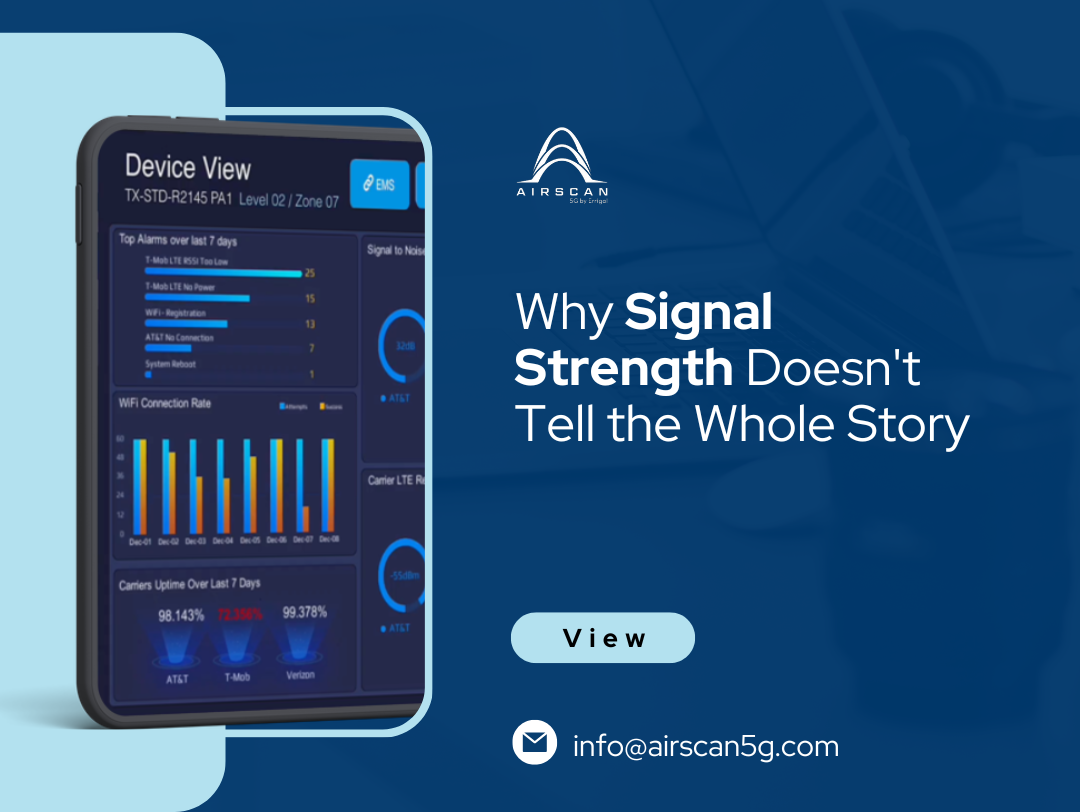
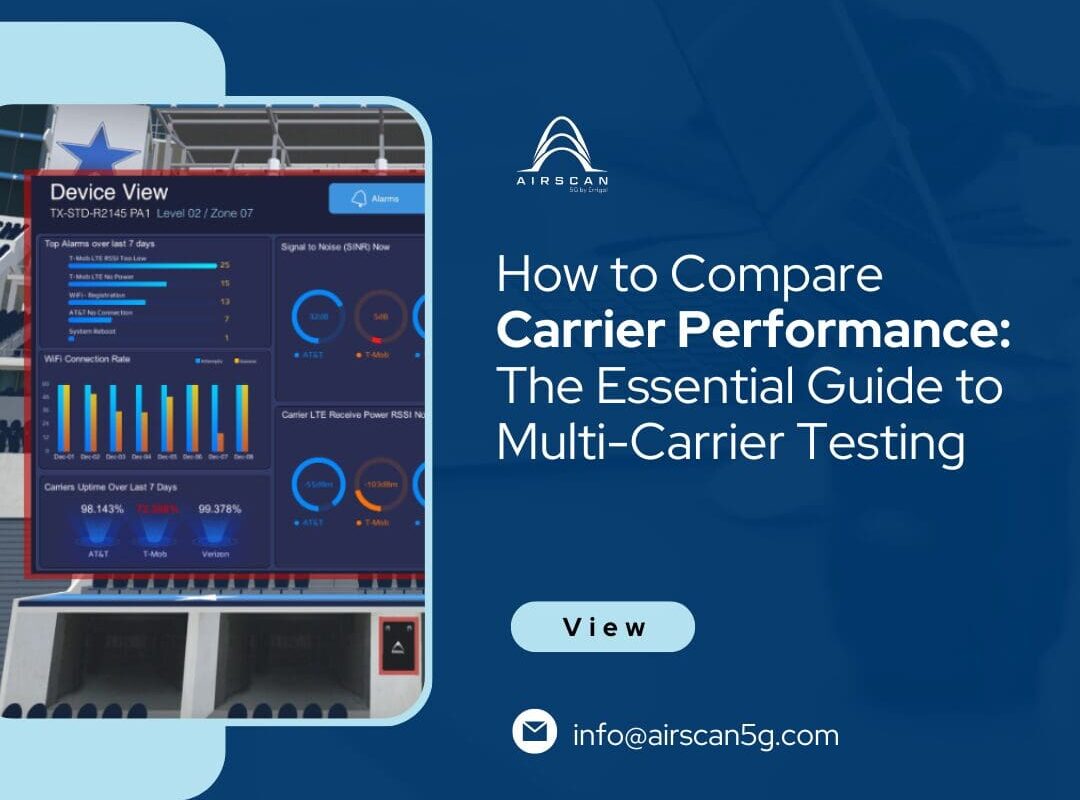
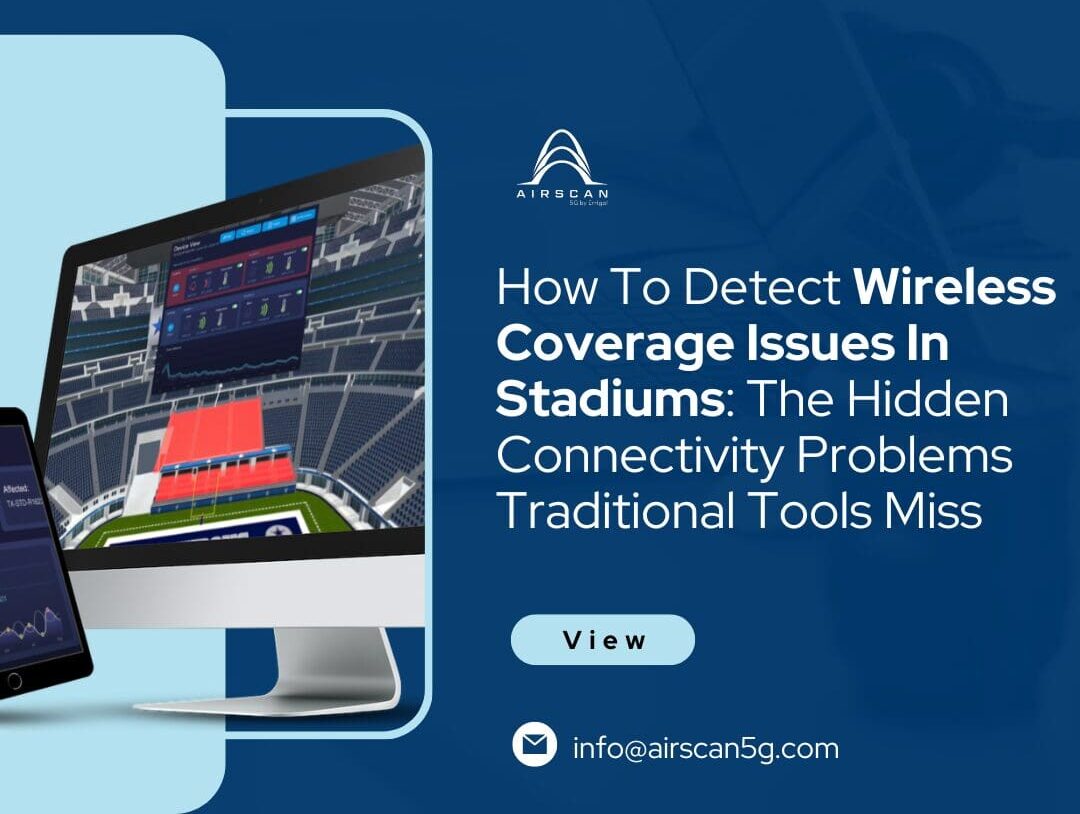
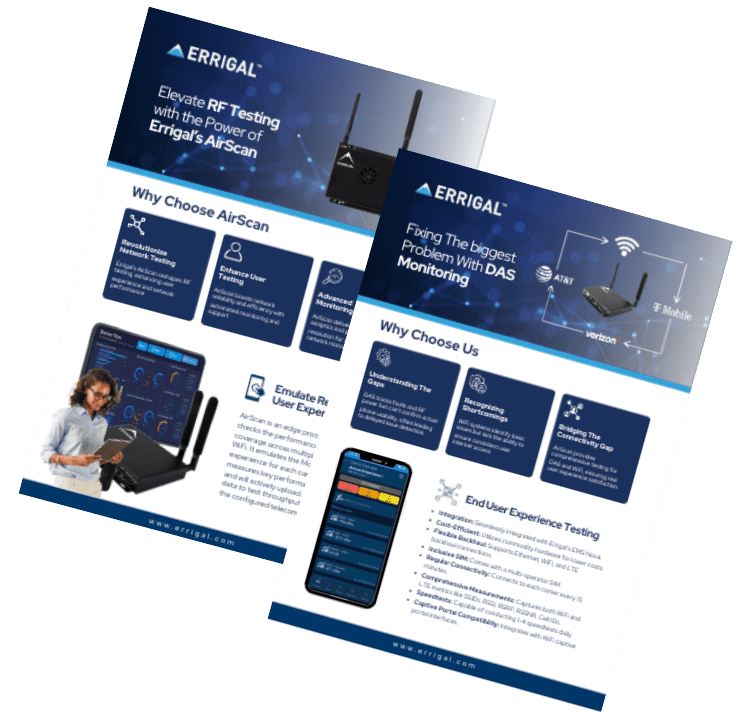
AirScan continuously performs scheduled RF tests across multiple mobile carriers and WiFi networks, measuring real-world user experience rather than simply reporting equipment status. The platform captures detailed performance metrics, historical trends and supports automated reporting and alerting.
Eliminating the Blame Game
One of the biggest advantages of independent monitoring is that it provides a single source of truth.
Imagine a large stadium receiving hundreds of complaints during a major sporting event.
The carrier reports that their network is operating normally.
The DAS vendor confirms there are no equipment alarms.
Venue management simply knows that visitors are unhappy.
Without objective testing, identifying the root cause can take days.
Independent RF monitoring can quickly determine:
- Which carrier is experiencing degraded performance
- Whether users are connecting to the DAS or falling back to outdoor macro cells
- Which areas of the venue are affected
- Whether the issue is isolated or recurring
- Exactly when performance began to deteriorate
Instead of relying on opinions, every stakeholder is working from the same verified data.
Stronger Conversations with Mobile Operators
Having access to historical RF performance data changes the nature of discussions with mobile network operators.
Rather than reporting vague complaints such as “users say the signal is poor,” organisations can present objective evidence showing:
- Performance trends over weeks or months
- Throughput during peak occupancy
- Carrier-specific degradation
- Coverage consistency throughout the venue
- Time-stamped performance reports
- Comparative results between multiple carriers
This enables more productive conversations around optimisation, capacity planning and SLA compliance.
Multi-Carrier Visibility Matters
Many large venues support multiple mobile operators simultaneously.
Performance can vary significantly between carriers, even when they share the same DAS infrastructure.
Without continuous testing, organisations have little visibility into which carrier is delivering the best—or worst—experience.
Independent monitoring allows building owners and operations teams to compare carrier performance side by side, identify recurring issues and ensure every operator is meeting expected service levels.
Moving from Assumptions to Evidence
As mobile connectivity becomes increasingly important to business operations, organisations need more than infrastructure monitoring to ensure reliable service.
Independent RF monitoring bridges the gap between network health and real user experience.
It provides the evidence needed to validate carrier performance, resolve disputes more quickly, improve operational decision-making and proactively identify issues before they affect customers.
Rather than waiting for complaints or relying on isolated network statistics, organisations gain continuous visibility into how their mobile environment is performing every day.
Conclusion
Carrier SLAs are only valuable if organisations have a reliable way to verify them.
Independent RF monitoring removes uncertainty by providing continuous, objective measurements of real-world mobile performance across every carrier operating within a venue.
With AirScan, organisations can validate carrier performance, identify issues before users notice them and support informed conversations with mobile operators using measurable evidence—not assumptions.
As expectations for indoor mobile connectivity continue to rise, independent RF monitoring is becoming an essential part of delivering the high-quality wireless experience that modern users expect.