How to Detect Wireless Coverage Issues in Stadiums Before Fans Complain
For years, venue operators have relied on Distributed Antenna Systems (DAS) to provide cellular coverage throughout stadiums, arenas, airports, and large public venues. At the same time, sophisticated monitoring tools have evolved to track the health of these systems, alerting teams when equipment fails, power levels drop, or network devices go offline.
Yet despite all this technology, the same problem continues to occur. The network appears healthy. The DAS reports no critical alarms. Operations teams see no obvious issues.
But fans, visitors, and staff can’t connect.
The reality is that traditional monitoring tools were never designed to measure the mobile user experience. They monitor infrastructure. They monitor equipment. They monitor alarms.
They don’t monitor what matters most: whether people can actually use their phones.
The Blind Spot in Modern Venue Operations
Imagine a sold-out stadium on game day.
Tens of thousands of fans are posting videos, sending messages, using mobile ticketing applications, ordering food through apps, and sharing their experiences online. Every one of those interactions depends on reliable wireless connectivity.
From the operations centre, everything appears normal. The DAS is online. The amplifiers are healthy. No major alarms are present.
But somewhere in the venue, devices have begun falling back from the in-building DAS to the outdoor macro network.
Signal quality is deteriorating. Throughput is dropping. Users are beginning to experience poor service.
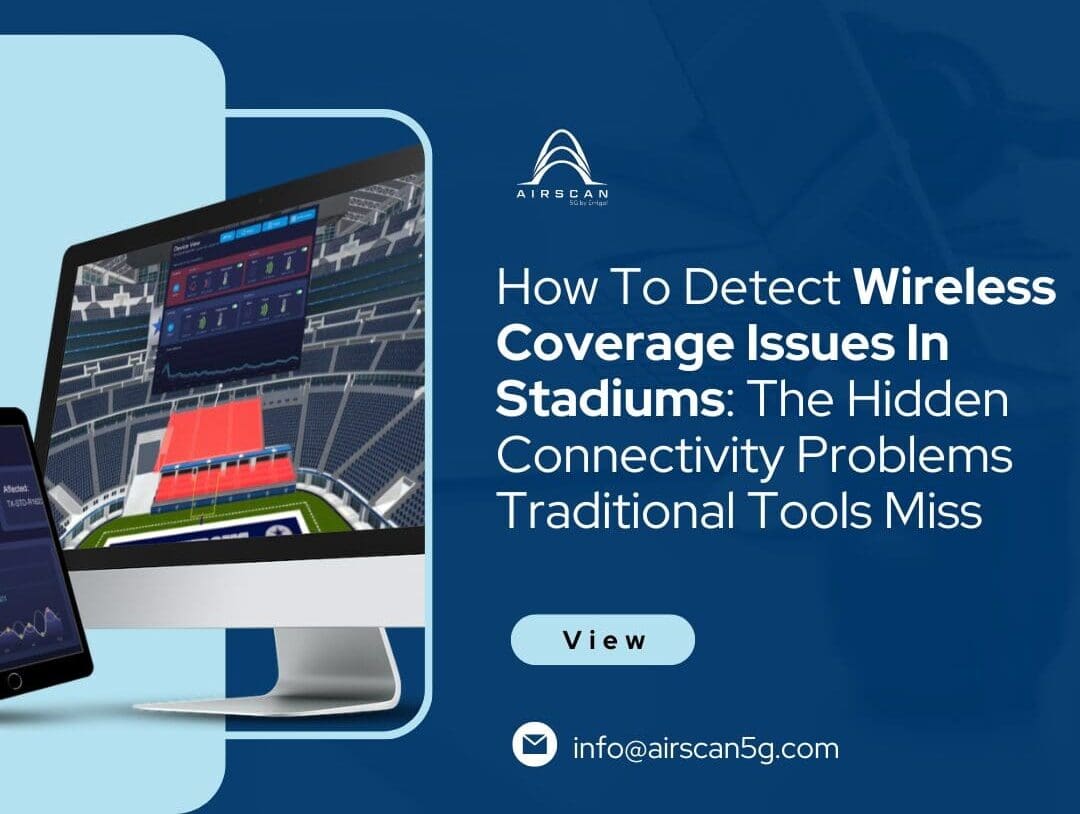
This is precisely the challenge facing venue operators who want to know how to detect wireless coverage issues in stadiums before they impact fans, VIP guests, and event operations.
The problem is invisible to traditional monitoring platforms because the infrastructure itself hasn’t failed. Only the user experience has.
Why User Experience Monitoring Matters
This challenge has become increasingly common as venues become more dependent on wireless technology.
Modern stadiums don’t simply provide connectivity for fans. Wireless networks now support:
- Mobile ticketing and venue access
- Point-of-sale systems
- Security operations
- Staff communications
- Digital signage
- Fan engagement applications
- VIP and corporate hospitality services
When wireless performance degrades, the impact extends far beyond a few frustrated users. Revenue can be affected. Operations can be disrupted. Brand reputation can suffer. The question is no longer whether the DAS is operational. The question is whether users can successfully connect, browse, stream, upload, and communicate.
A Different Approach to RF Monitoring
This is where AirScan changes the conversation.
Rather than monitoring the network from the infrastructure side, AirScan monitors from the user side.
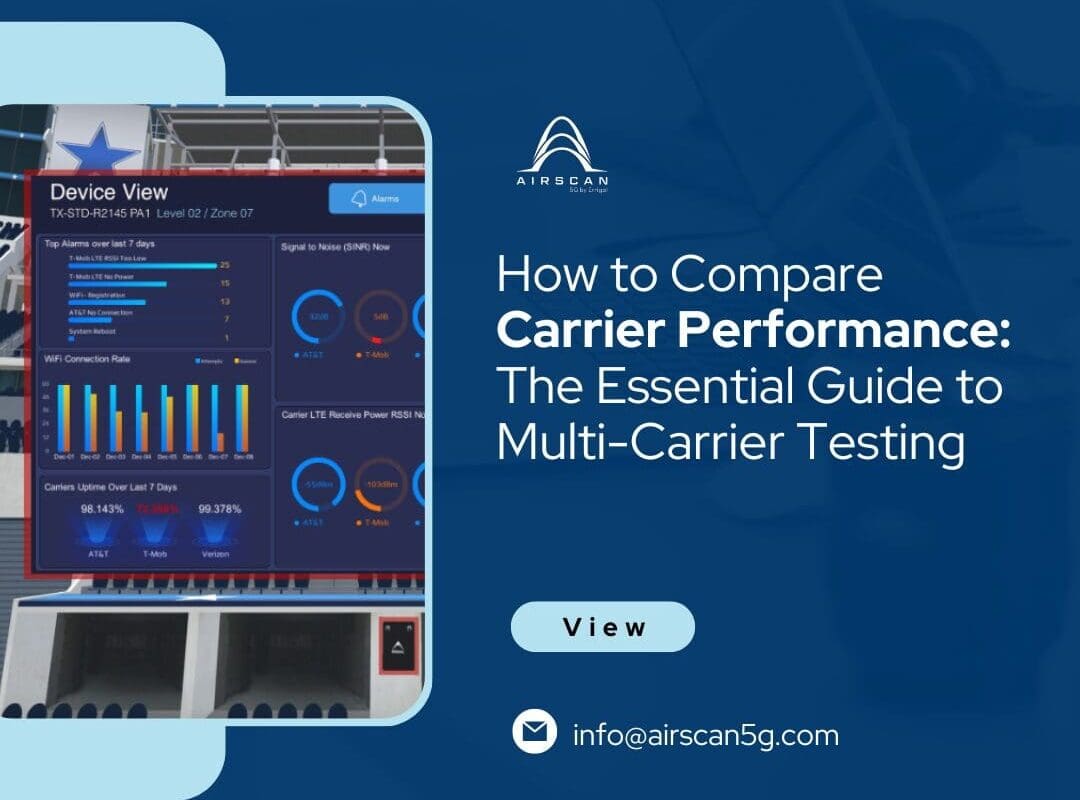
The platform continuously emulates real mobile users across major carriers and WiFi networks, performing the same activities that venue visitors perform every day.
AirScan measures:
- Signal strength
- Signal quality
- Throughput performance
- Connection success rates
- DNS resolution
- Carrier-specific performance
- Network transitions
- WiFi connectivity
By acting like a real user, AirScan provides visibility into issues that traditional monitoring tools cannot see.
Finding Problems Before Users Complain
One of the biggest challenges for venue operators is that wireless issues are often discovered too late.
The first indication of a problem is frequently a complaint. A VIP guest reports poor service. A corporate client raises concerns. Fans take to social media. By that stage, the damage has already been done.
For many stadium operations teams, the challenge is understanding how to detect wireless coverage issues in stadiums before they impact the fan experience, disrupt operations, or trigger a flood of support requests.
AirScan was designed to identify these issues before they become customer-facing problems.
By continuously testing real-world connectivity, AirScan can detect:
- Carrier-specific service degradation
- DAS-to-macro fallback events
- Coverage gaps
- Throughput failures
- WiFi performance issues
- RF interference
- Band-specific performance anomalies
Rather than waiting for complaints or relying solely on infrastructure alarms, AirScan provides real-time visibility into the actual user experience across the venue.
When thresholds are exceeded, automated alerts and tickets can be generated immediately, allowing operations teams to investigate and resolve issues before users are affected.
Moving From Reactive to Proactive Operations
Traditional monitoring is reactive. It waits for alarms. It waits for equipment failures. It waits for users to report issues.
AirScan enables a proactive approach.
Instead of asking whether the network is online, operators can understand whether the network is actually delivering the experience users expect.
This shift is becoming increasingly important for stadiums, airports, healthcare facilities, commercial buildings, and other high-value environments where connectivity has become mission-critical.
The Future of Venue Connectivity
As wireless networks continue to evolve, expectations will only increase.Fans expect seamless connectivity throughout an entire event. Tenants expect reliable carrier performance.Operations teams need objective data to validate network quality and support carrier discussions.
Infrastructure monitoring will always remain important but infrastructure monitoring alone is no longer enough. The organisations that deliver the best wireless experiences will be those that understand not just what their network is doing, but what their users are experiencing.
That’s the gap AirScan was built to close.
Because in today’s connected world, a network isn’t successful simply because it’s operational.
It’s successful when every user can connect with confidence.